The Core Problem
-
01.
You are not paying for work. You are paying for the time it takes you to check the work. Manual quality control is the biggest hidden cost of remote teams.
-
02.
Marketplaces are excellent for finding strangers. They are terrible for managing long term relationships because they charge a permanent percentage fee on every transaction.
If you spend twenty hours a week reviewing files, sending back revisions, and begging for status updates, you are not managing work. You are chasing people.
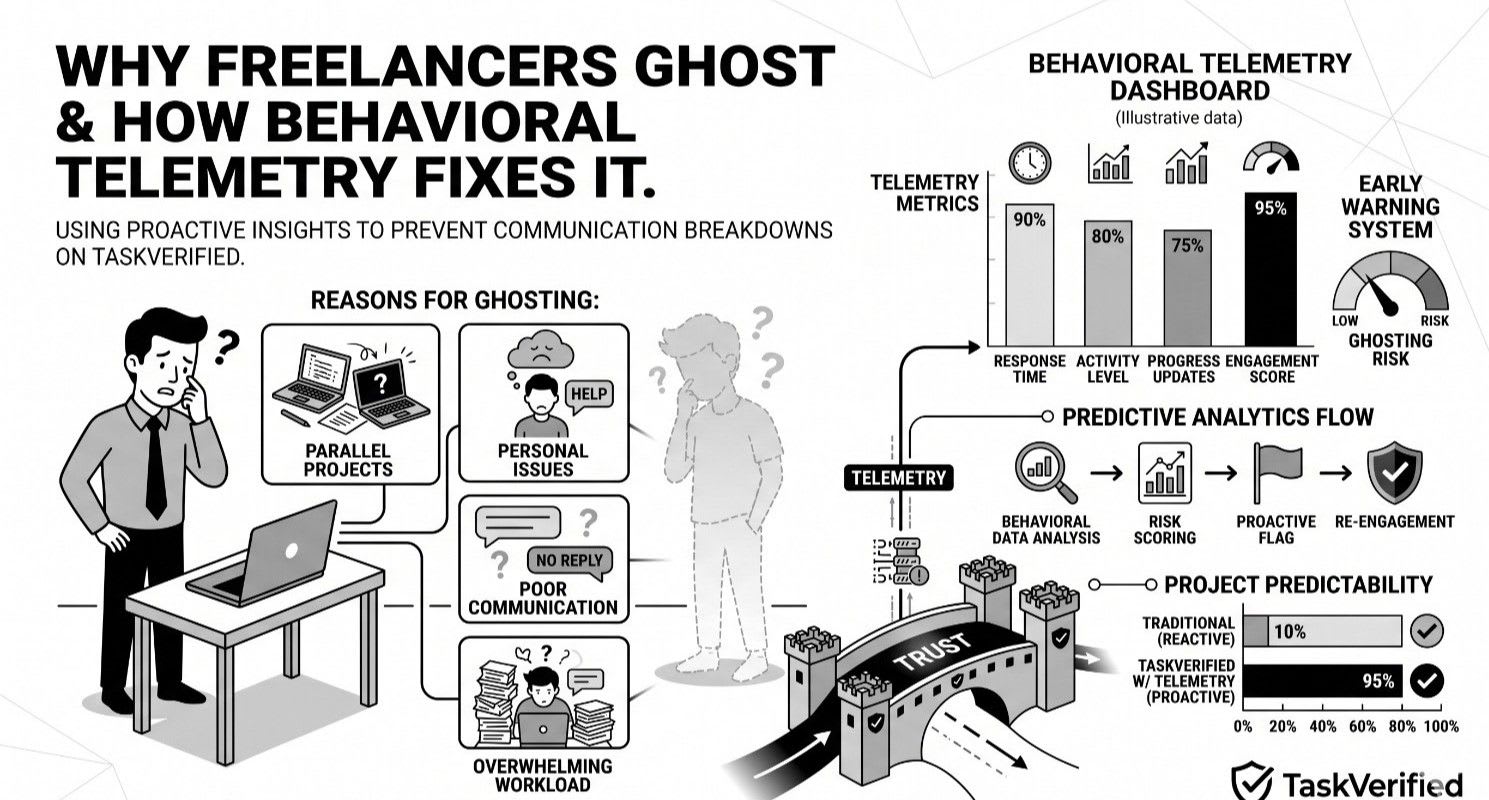
Agency owners and operations managers hit a very specific breaking point when scaling a remote roster. The breaking point is rarely the cost of the freelancers themselves. The breaking point is the administrative friction required to ensure those freelancers actually follow instructions. Waking up at 6 AM to check if a contractor formatted a CSV correctly or accidentally used AI to generate a technical document is not a sustainable operational model.
When a freelancer submits work that ignores the project brief, the immediate question is "What do I do?" The traditional answer is to send it back, start a lengthy chat dispute, or just fix it yourself to save time. The modern answer is to stop relying on manual review entirely. In this guide, we will break down exactly how to choose the best freelancer management software, compare the most popular Upwork alternatives for an existing team, and show you how to manage remote contractors without paying permanent marketplace commissions.
What is a Freelancer Management System (FMS)?
Defining the difference between sourcing and managing.
Before deciding how to choose the right software, it is critical to define what the software actually does. A Freelancer Management System is a dedicated platform designed to handle the operational execution of a remote workforce.
It operates on a "Bring Your Own Freelancer" model. The software assumes you already know the people you want to hire. Because the platform is not spending money to market your job post or find you talent, an FMS does not charge commission fees on payments. Instead, it provides the actual management tools missing from traditional marketplaces. This includes automated onboarding, secure contract storage, audit trails for dispute resolution, and most importantly, automated quality control gates.
Marketplaces are built to help you find people. A Freelancer Management System is built to help you run them.
When teams try to manage long term contractors using generic project tools like Notion or spreadsheets, the burden of quality control falls entirely on the manager. The spreadsheet cannot scan a submitted document for plagiarism. A Slack channel cannot physically block an invoice from being sent if the work is incomplete. An FMS bridges this gap by acting as a digital enforcement layer between the employer and the contractor.
The Four Types of Freelance Systems
Understanding Upwork vs WorkSuite vs TaskVerified.
The biggest mistake agencies make is choosing a software platform built for a problem they do not have. The current market is divided into four distinct categories. Choosing the right one depends entirely on your primary pain point.
1. The Sourcing Marketplaces (Upwork, Fiverr)
When to use them: You have a one-time project and need to find a stranger quickly.
The problem for existing teams: These platforms act as digital recruiters. They charge a premium for connecting you with talent. If you bring your own trusted freelancer onto a marketplace just to use their payment tools, you will pay a 10 to 20 percent commission fee forever. It is a permanent tax on a relationship you already own.
2. The Global Compliance Behemoths (Deel, Remote)
When to use them: You are hiring full-time international employees and need a legal Employer of Record (EOR) to navigate foreign tax laws and health benefits.
The problem for existing teams: These platforms are built for massive enterprise HR departments. They are incredibly expensive, often charging upwards of 200 dollars per seat per month. If you are managing a handful of fractional freelancers, using an EOR is massive overkill and drains your operational budget.
3. The Traditional Management Software (WorkSuite, TalentDesk)
When to use them: You have hundreds of freelancers and need a directory to organize their onboarding documents and send bulk payments.
The problem for existing teams: Traditional FMS platforms are essentially digital filing cabinets. They are excellent for paying people, but they do absolutely nothing to verify the actual work being submitted. You still have to download every file and manually check for errors before approving the invoice.
4. The Quality-Enforced FMS (TaskVerified)
When to use it: You already have a roster of trusted freelancers, and your biggest pain point is quality control, missing deadlines, and chasing updates.
Why it wins for existing teams: Platforms like TaskVerified are built specifically for the "Bring Your Own Freelancer" model without the commission fees. But more importantly, they feature automated quality gates. Bad work is rejected by the system before it ever reaches your desk, entirely eliminating the manual rework loop.
The Hidden Costs of the Wrong System
What happens when you use a sourcing tool for management.
The financial cost of using the wrong system is obvious. If you are paying Upwork a 10 percent cut on a contractor you have worked with for two years, you are throwing away margin. But the financial cost is actually the smallest penalty.
The real penalty is time. According to recent enterprise data from Zapier, the average manager spends 4.5 hours every single week just revising, rejecting, or entirely recreating external work that failed to meet operational standards. Furthermore, industry project management studies show that vague feedback and missed instructions account for up to 40 percent of total project delays.
When you use a spreadsheet or a basic project management board, there is no enforcement. You ask a freelancer to upload a specific 1080p video file. They upload a 720p file. You have to notice the error, open a chat window, type out a polite correction, and wait 24 hours for a response. Your system is not managing the work; you are.
The New Standard: Quality-Enforced Management
Why asking for a file is no longer enough.
A modern Freelancer Management System should have all the baseline features you expect. It must have transparent time tracking. It must have an automatic, state-aware invoicing system that knows exactly when a milestone is completed. It must include sovereign storage that routes deliverables directly to your own Google Drive or OneDrive. And it needs an in-built preview layer with instant inline notifications so you never have to download a ZIP file again.
TaskVerified includes all of these features. But we believe an FMS should never just be about asking for a file, receiving that file, and then spending hours disputing the quality. That is why we put Quality Control at the very top of the architecture.
The Entry Point Solution
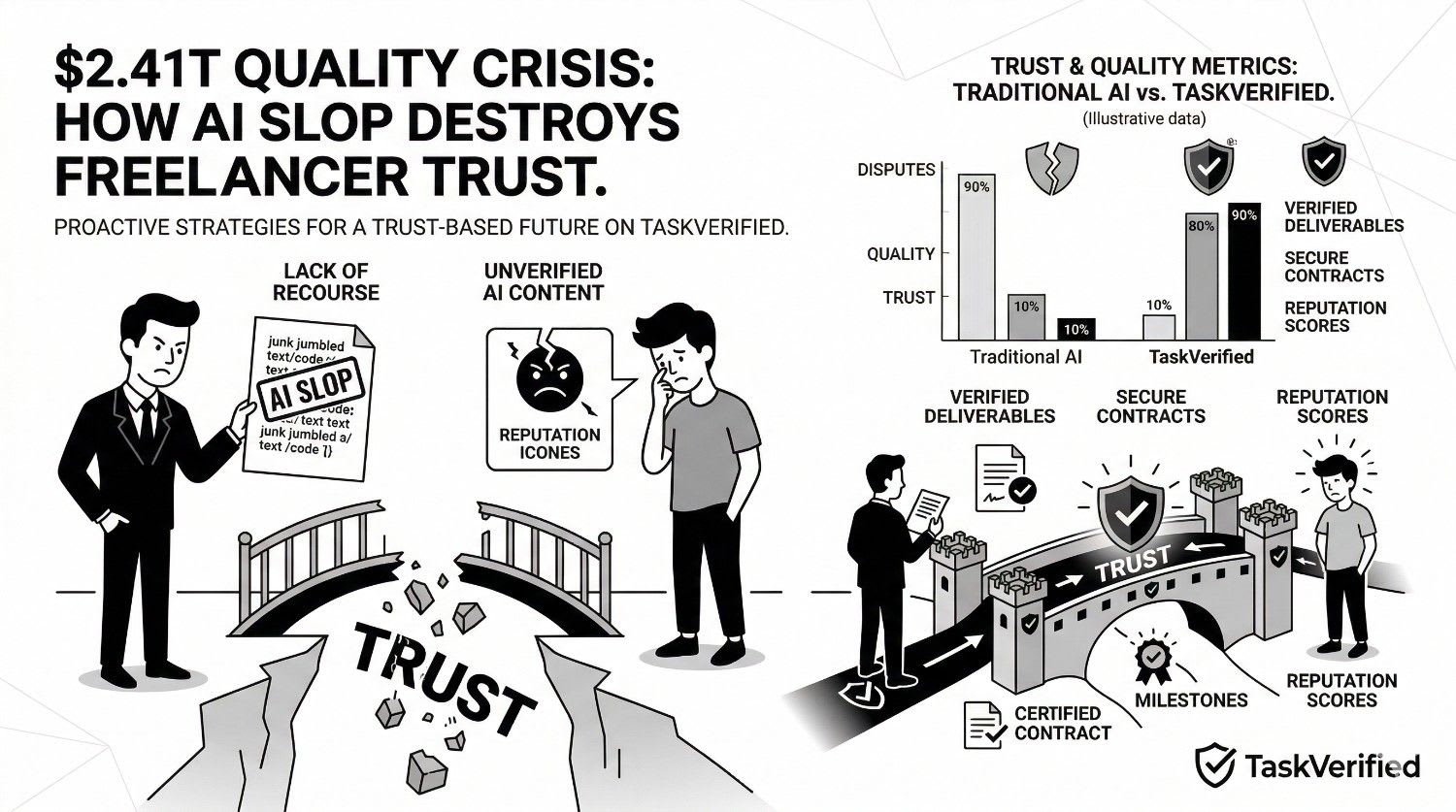
Every other platform allows bad work to be submitted, leaving you to deal with the fallout. TaskVerified solves the problem at the entry point. Our Robot PM actively scans deliverables against over 120 production-grade rules the moment the freelancer clicks submit. Whether it is performing Cryptographic PII Detection to prevent data leaks, evaluating SEO Semantic Anchor Quality, running Passive-Voice Ratio audits on copy, or checking for AI contamination—the platform rejects non-compliant work instantly. You do not have to write a polite email. You only review work that has already passed your standard.
The 8 Non-Negotiable FMS Criteria
How to evaluate software beyond the standard features.
If you search for advice on choosing an FMS, you will find generic lists telling you to look for "ease of use" and "customer support." That is not operational strategy. When evaluating enterprise-grade management software for your remote team, you need to ask highly specific, architectural questions. Here are the eight criteria you must demand.
1. The Rework Mitigation Protocol
Does the platform physically stop bad work at the gate, or does it merely provide a chat window for you to argue about it? Most platforms assume the review process begins after the file is uploaded. This is a critical architectural flaw that guarantees you will lose hours to manual review.
A true FMS operates at the entry point. It must allow you to set complex, forensic-grade validation rules that prevent the submission from finalizing unless the standards are met. This means going far beyond basic metadata checks. If a contractor submits a document with too much Passive Voice, an unbalanced SEO Link Ratio, or sensitive PII data that violates compliance, the software should bounce it back to them automatically with inline feedback.
2. Data Sovereignty Architecture
Where do the deliverables actually live? The hidden trap of legacy management software is vendor lock-in. If the platform goes bankrupt tomorrow, or if you simply cancel your subscription, you instantly lose access to your entire archive of completed deliverables.
You must demand data sovereignty. The FMS should act as a router, not a warehouse. Deliverables should be piped directly from the freelancer's upload screen into your own private Google Drive, OneDrive, or AWS S3 buckets. You own the files immediately.
3. Cryptographic Audit Trails
If a bank disputes a transfer or a freelancer claims they were never paid, what evidence does the platform provide? Generating a generic PDF invoice is legally weak and functionally useless in arbitration.
The system needs a high-fidelity settlement ledger. Even if the platform does not process the funds directly, it must record a timestamped, hashed audit trail of the payment handshake. It should document exactly when the invoice was generated, when the employer confirmed payment, and when the freelancer acknowledged receipt.
4. Contamination Intelligence (AI Slop Detection)
Are you paying premium human rates for copy-pasted machine output? The explosion of generative AI means the baseline assumption of trust is compromised.
A modern FMS must have native contamination scanning. It is not enough to integrate a third-party tool retroactively. The software must detect if a freelancer used unauthorized AI to generate a codebase, legal document, or content piece, and flag it before the milestone is approved.
5. The "Shadow" CRM Layer
Can you leave private operational notes about a freelancer without them seeing it? Managing a team requires brutal honesty. You need to track who was late, who requires too much hand-holding, and who is an absolute rockstar.
If the platform forces all communication to be public, you lose your operational memory. You need an employer-cloaked CRM layer where you can assign internal ratings, shadow tags, and private notes that the contractor can never access.
6. Inline Remediation (Deep Annotations)
When you need to request a revision, how is that feedback delivered? Vague feedback destroys margins. If you are forced to write "Please change the color of the button at 0:45 in the video," you are wasting time.
The platform must support deep, inline annotations. You should be able to click directly on a specific pixel of an image, a specific timestamp in a video, or a specific line of code to anchor your note. This completely removes ambiguity and drastically speeds up the revision cycle.
7. Intelligent Time Governance
Invoice shock is the fastest way to ruin a freelance relationship. If you authorize an hourly contract, how do you prevent the contractor from accidentally leaving the timer running while they walk away for lunch, or worse, manually padding their timesheet on a Friday afternoon?
Basic time tracking is not enough; you need deterministic time governance. Can you set a strict "Max Hours Cap" that automatically locks the timer when the weekly budget is reached? Does the platform have Idle Time Detection that automatically pauses billing if keyboard or mouse activity stops? Crucially, does the system allow you to permanently disable manual time entries, forcing 100 percent of the invoice to be generated by verified tracking?
8. True Commission-Free Infrastructure
Look closely at the billing structure. Is the platform charging you a monthly software license, or are they quietly skimming a percentage off the top of the freelancer's payout?
A percentage fee is a permanent tax on your working relationship. A true FMS charges a flat, predictable monthly fee for the software itself, completely untethered from the volume of payments you process.
Choose What You Actually Need
The definitive diagnostic checklist.
Choosing the right platform is about aligning software with your primary operational bottleneck. Ask yourself the following sets of questions. When you find yourself answering "Yes" to a group, you have found your category.
- ?
Do I need to find a stranger with a specific skill set immediately?
- ?
Is this a one-time, low-stakes project where I do not need a long-term relationship?
- ?
Am I willing to pay a permanent 10 to 20 percent commission fee on every payout?
If YES → Choose The Sourcing Marketplaces
These platforms act as digital recruiters. They are excellent for finding talent but terrible for managing existing teams due to the permanent tax.
Platforms include: Upwork, Fiverr, Freelancer.com, Toptal.
- ?
Am I hiring full-time international workers rather than fractional freelancers?
- ?
Do I need a legal Employer of Record (EOR) to navigate foreign labor laws, taxes, and health benefits?
- ?
Is my enterprise budget prepared to spend over $200 per seat, per month?
If YES → Choose The Global Compliance Behemoths
These are massive HR platforms built for full-time international employment. They are functionally overkill for managing fractional, milestone-based contractors.
Platforms include: Deel, Remote, Oyster, Papaya Global.
- ?
Do I have hundreds of freelancers and simply need a directory to organize their onboarding documents?
- ?
Is my only operational goal to send one bulk payment at the end of the month?
- ?
Do I have a dedicated internal QA team that already downloads and checks every file manually?
If YES → Choose Traditional Management Software
These platforms are excellent digital filing cabinets for Finance and HR teams to organize NDAs and execute bulk payments, but they provide zero verification of the actual work being submitted.
Platforms include: WorkSuite, TalentDesk, WorkMarket.
- ?
Does the platform physically stop bad work at the gate with automated forensic validation rules rather than just providing a chat box to argue?
- ?
Does the system provide Data Sovereignty, piping deliverables directly to my own secure cloud storage instead of holding them hostage?
- ?
Does the platform generate a cryptographic, hashed audit trail of the payment handshake for indisputable dispute resolution?
- ?
Is there native Contamination Intelligence to detect AI slop and copy-pasted machine output instantly?
- ?
Can I access an employer-cloaked "Shadow" CRM layer to leave private performance ratings my freelancers can never see?
- ?
Can I drop deep, inline annotations directly on specific video timestamps or code lines to eliminate vague feedback?
- ?
Does the platform offer intelligent Time Governance, including hard max-hour caps, idle detection, and manual-entry disablement?
- ?
Am I paying a flat, predictable monthly software fee with absolutely zero percentage commissions taken from my freelancer?
- ?
In addition to the 8 criteria above, does the platform include all standard FMS features like calendar views, task assignment, real-time tracking, automated follow-ups, deadline management, and built-in chat?
If YES → Choose The Quality-Enforced FMS
If your primary pain point is the time you lose to manual review, chasing updates, and fixing bad work, you need an infrastructure built entirely around quality control.
Platform: TaskVerified. We are the only platform dedicated to being a verification and quality-first FMS.